Protocol Level Trust: Beyond Binary Verification
In the shadowy corridors of cybersecurity, we speak in colors. TLP:RED means "for your eyes only—burn after reading." TLP:CLEAR means "share freely." This is the Traffic Light Protocol, and it's how we've managed sensitive information for decades.
Here's the uncomfortable truth: trust is not a toggle; it's a spectrum. The current internet missed this memo. It treats content verification like a light switch—on or off, real or fake. But reality is messier than that.
Consider a photograph from a conflict zone. The pixels are authentic—captured by a real camera sensor at a real moment in time. But the caption claims it was taken in Gaza when it was actually shot in Syria three years ago. Is the photo "real" or "fake"? Both. The image is genuine; the context is a lie. Binary verification fails here. We need gradients.
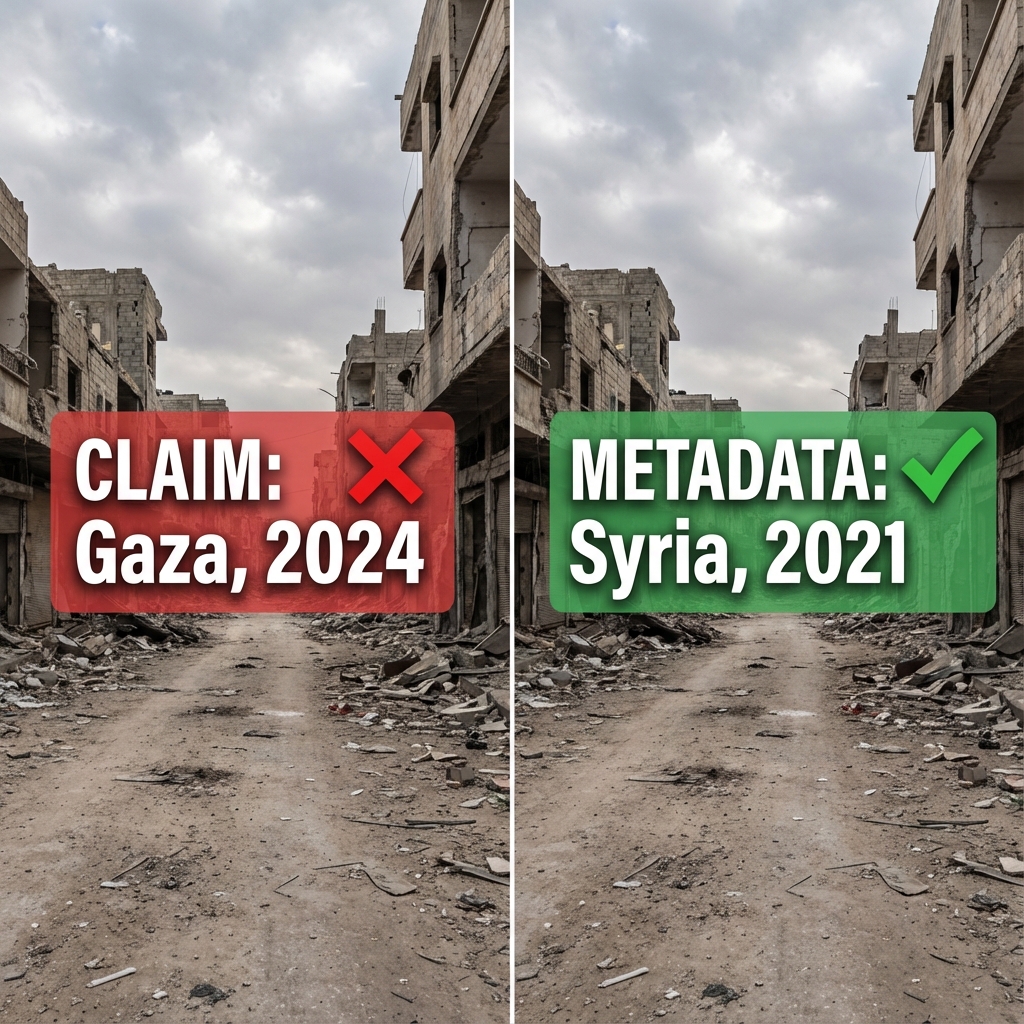
Metadata as a Weapon
We often think of metadata as harmless background noise—file sizes, ISO settings, shutter speeds. But to an adversary, metadata is intelligence. A photo's EXIF data can reveal the exact GPS coordinates of a dissident's safe house. It can reveal the unique serial number of a whistleblower's lens, unmasking their identity.
This is why naive approaches to "transparency" are dangerous. Broadcasting the full history of a file isn't always ethical. If proving a war crime requires getting a source killed, the system has failed. Silversparre's SDK handles this by aggressively stripping device fingerprinting data before the cryptographic binding happens, unless explicitly authorized. We protect the source to protect the truth.
Anatomy of a Restricted Asset
Silversparre borrows from the TLP playbook. We encode trust levels directly into the C2PA manifest—the cryptographic "birth certificate" that travels with every piece of media. Here's what a TLP:AMBER asset looks like under the hood:
{
  "asset_id": "urn:uuid:f81d4fae-7dec-11d0-a765-00a0c91e6bf6",
  "trust_level": "TLP:AMBER",
  "assertions": {
    "c2pa.actions": [
      {
        "action": "c2pa.created",
        "softwareAgent": "Vericord Camera v2.1"
      }
    ],
    "vericord.region": {
      "type": "encrypted",
      "algorithm": "aes-256-gcm",
      "ciphertext": "YTNmOS4uLmQx",
      "note": "GPS data encrypted; decryptable only by authorized auditors"
    }
  }
}
Notice the GPS coordinates? They're there—but encrypted. Only authorized auditors with the decryption key can see exactly where this photo was taken. The public gets proof of authenticity; investigators get the full picture. This is selective transparency.
The Analog Hole
But what about the "Analog Hole"? This is the oldest trick in the book: taking a picture of a screen. You can have the most secure cryptographic chain in the world, but if I photograph a modified image displayed on my monitor, the new photo is technically "authentic" (it's a real photo of a screen).
Silversparre addresses this through screen-detection assertions. Our capture modules analyze the frequency domain of the image to detect the tell-tale moiré patterns of distinct pixels on a monitor. We don't just say "this image is signed"; we say "this image is signed, and we certify it is a direct capture of the physical world, not a reproduction."
Privacy Note: Before signing, our SDK automatically strips device fingerprints—serial numbers, software versions, the digital breadcrumbs that could identify a source. Unless you explicitly say otherwise, your camera's identity stays protected.
We call this approach Restricted Reality. It's the radical idea that privacy and transparency don't have to be enemies. A journalist in a dangerous region can prove their photo is unedited without revealing coordinates that could get them killed. A whistleblower can authenticate a document without exposing their device.
Truth doesn't require total exposure. It just requires enough proof.